Core cordless path
M18-style workflows suit heavy fastening, drilling, cutting, and lighting where crews need runtime across a broad product set.
Technology here means brushless drive control, battery platform management, accessory fit, service data, and selection guidance for crews that need power tools, hand tools, and outdoor equipment to work as one system.
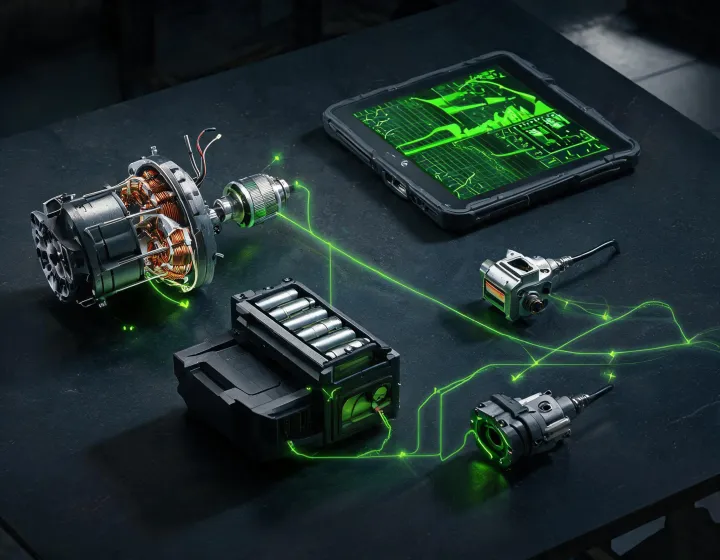
This dashboard tracks technology performance and tool readiness. Each panel turns a tool decision into a practical signal for procurement, service, and field leadership.
M18-style workflows suit heavy fastening, drilling, cutting, and lighting where crews need runtime across a broad product set.
M12-style compact tools support service panels, overhead work, cabinet access, and tight mechanical spaces without overloading the operator.
Bits, blades, abrasives, and sockets are evaluated by material, torque, speed, and wear pattern before they are stocked.
Requests capture platform, symptom, serial context, and category details so service routing can begin with fewer follow-up questions.
These resource cards work like downloadable research papers for tool technology: motor behavior, battery strategy, accessory selection, and service data hygiene.
How torque curves, heat, trigger control, and duty cycle influence tool body choice for drilling, cutting, and fastening.
A buyer-facing worksheet for runtime demand, charger count, cold-weather use, tool density, and service-truck storage.
A practical guide for pairing drill bits, saw blades, grinding discs, sockets, and hole saws to application conditions.
This timeline maps technology readiness. It shows how tool requests move from crew requirements to a platform recommendation with service support attached.
Document material, fastening load, cut length, overhead access, outdoor route, and expected shift length.
Select tool bodies, battery class, chargers, storage, and accessories as one package rather than separate line items.
Confirm warranty route, dealer availability, replacement urgency, and service record needs before the kit goes live.
Use failures, runtime notes, accessory wear, and operator feedback to adjust the next quote or maintenance plan.
Bring runtime targets, tool failures, material conditions, and accessory questions into one request. The response can point toward the right platform and support route.